


Page 178 - 4096-BOOK2
P. 178
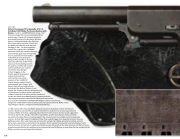
LOT 1189
Historic Documented C Company No. 215 U.S.
Colt Model 1847 Walker Percussion Revolver with
Holster - Serial no. CCOMPANYNo215, 44 cal., 7 5/8
inch part octagon bbl., blue/casehardened finish,
walnut grips. Samuel Colt’s firearms may have
been manufactured in the Northeast, but their
history is intimately linked to the American
West, especially to the State of Texas, and
the Walker was officially made the state
handgun in 2021. The state legislature
noted: “The original 1847 Colt Walker
pistol was historically crucial to the early
survival of the great State of Texas” and
was “an essential tool in the defeat
of the Mexican army during the
Mexican-American War to reclaim
Texas, the 28th state of the Union.”
Texas was the key battleground in
the early years of the Colt revolver,
and the Colt Patersons revolvers
used by the Texas Rangers
in their struggles on the
frontier against the powerful
Comanche proved that
Colt’s revolvers were truly
weapons of war suitable for
intense frontier combat. Heavily
outnumbered Texas Rangers used
them to fight off Comanche attacks,
including at the Battle of Walker’s Creek
despite the Comanche warriors being notorious
for their bravery and their talent in mounted
combat. Texans’ thirst for Colt’s revolvers continued
on after the Patent Arms Manufacturing Company folded in
1842 and grew with the outbreak of the Mexican-American War.
As a result, the formidable Colt Model 1847 Walker revolver was famously
designed in collaboration between Samuel Colt and Captain Samuel H. Walker of the
Texas Rangers and the U.S. Regiment of Mounted Riflemen.
In 1847, Samuel Colt contacted Walker asking for details on the battles in which his Paterson
revolvers had been used and for an endorsement that he could then use to pursue government
contracts. Walker wrote back a glowing endorsement of Colt’s revolvers but also made suggestions
on how to improve the design. John Coffee Hays, Walker, and the Texas Rangers had successfully
used Colt’s .36 caliber Paterson revolvers against the Comanche but now sought even more powerful
revolvers for their fight against the Mexican Army. They wanted bigger, more powerful revolvers, true war-
fighting revolvers that could stop a man or horse with a single shot. Walker got what he wanted, and Colt
did as well: a government contract for 1,000 revolvers. These massive “horse pistols” resurrected Samuel Colt’s
firearms business and set him on a path to immense success and wealth. At the time, however, Colt did not have a
manufacturing facility for the revolvers, so he contracted to have Eli Whitney Jr. make them for him, and by that fall,
Walker revolvers were arriving in the Southwest.
176


